

Data-informed instruction
—
mCLASS Math works alongside your core instruction, differentiation, and intervention. The data model behind mCLASS Math provides comprehensive data for each student across grades K–8, easily connecting teachers to the immediate next steps to support all learners.
Educator and Caregiver Reports
Harness the power of digital math and graphing tools to show students the meaning of their thinking in context.
—
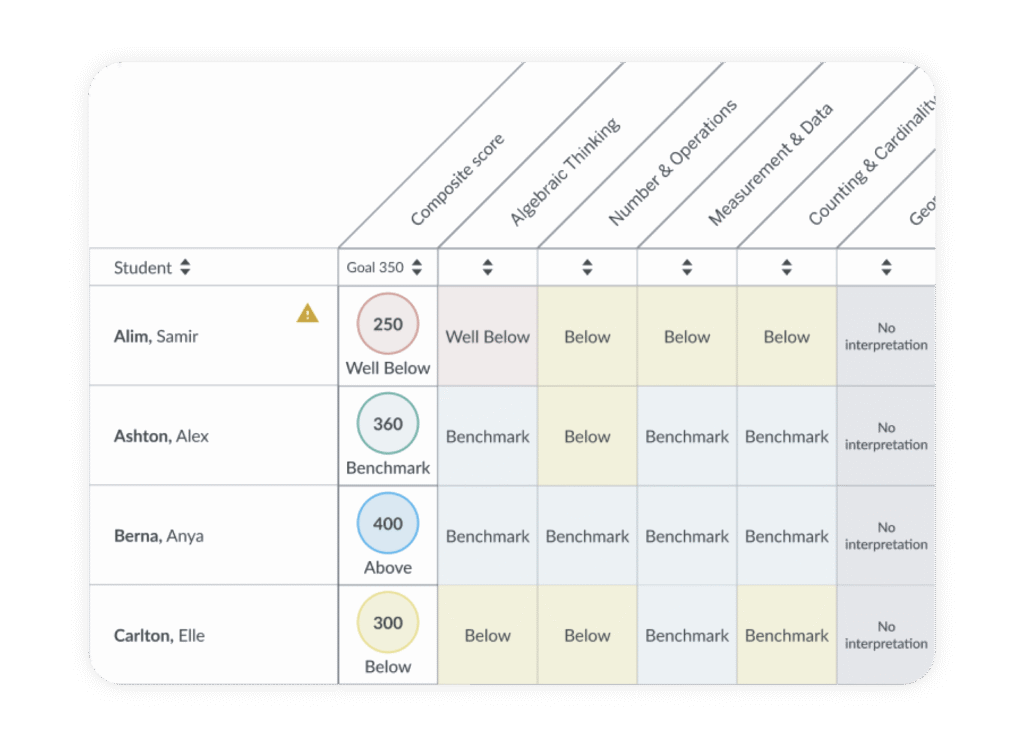
Empirically established cut scores and domain-specific measures help teachers plan for tiered intervention, with classroom, school, and district-level performance reports set to predict end-of-year outcomes.
mCLASS Math’s criterion-referenced cut scores classify student performance into four ordered categories:
Assessing for risk
—
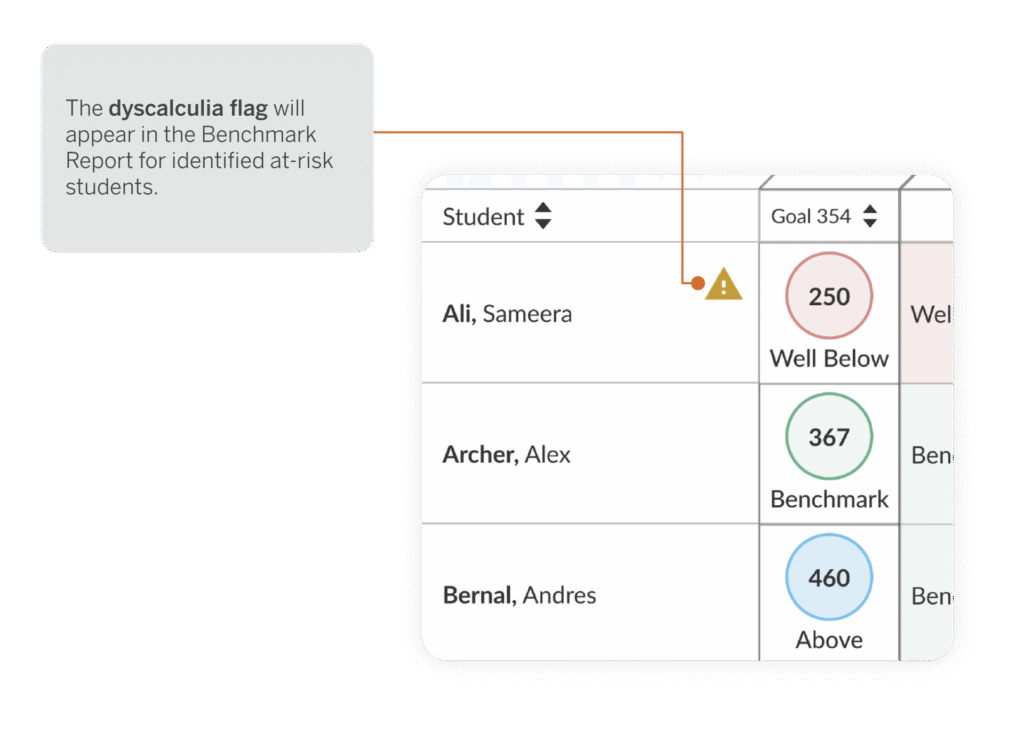
mCLASS Math identifies students in grades K–3 who may be at risk of developing dyscalculia. This risk is based on data highlighting students who’ve experienced difficulty with basic concepts across several math domains on the assessment.
Students are more than a composite score.
—
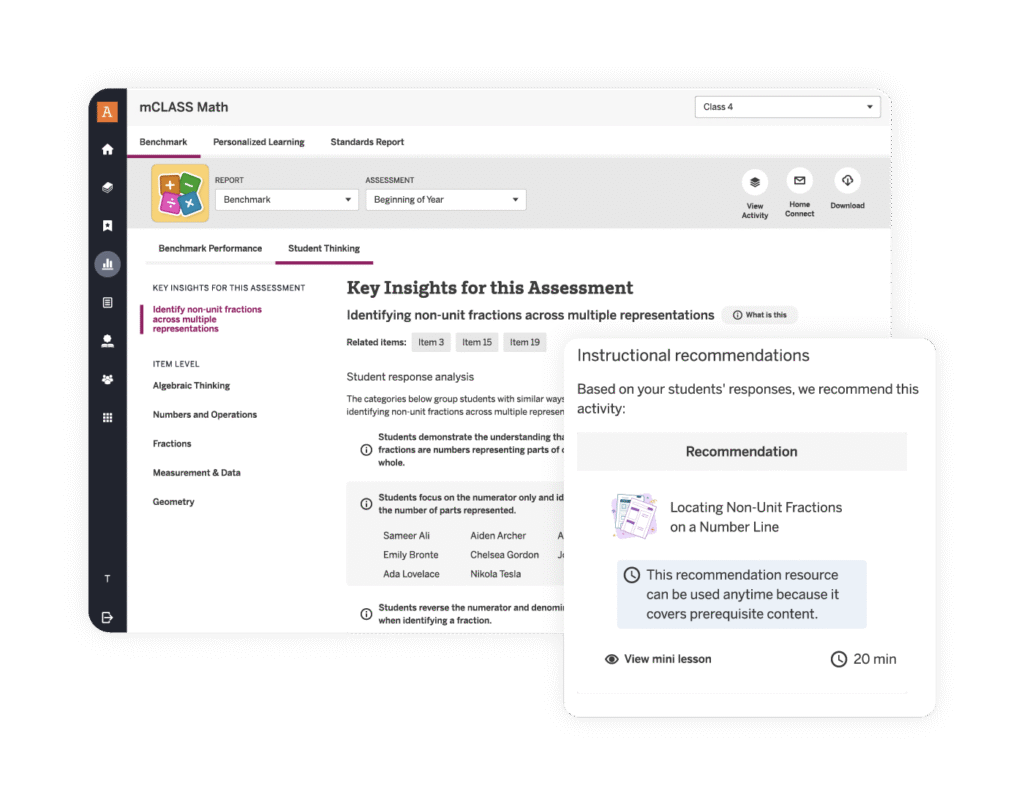
The Student Thinking Report surfaces patterns in reasoning, misconceptions, and strengths to inform immediate next steps for more targeted instruction.
Understanding student performance across the year
—
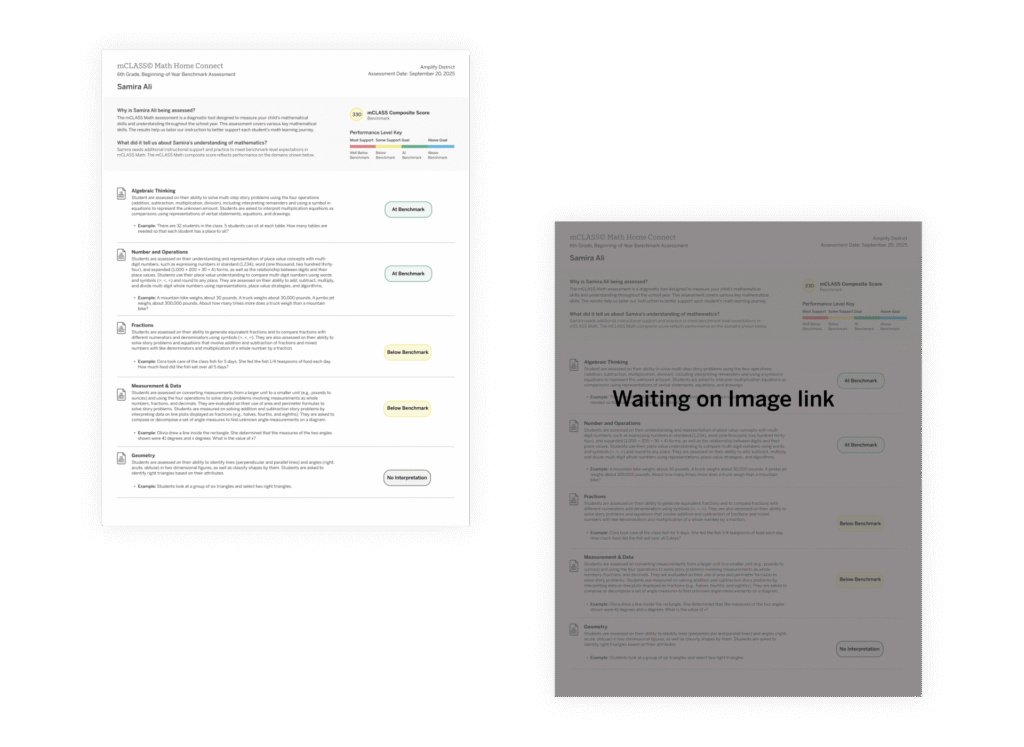
mCLASS Math provides both normative scores and predictive cut scores that are criterion-referenced. Reports track student performance by composite and major domain for the grade, with Progress Monitoring and Benchmark reporting for teachers and administrators.
These reports include the Individual Student Report for a snapshot of student performance and Home Connect report to share data with caregivers.
Instructional resources for intervention and practice
The data-driven recommendations and flexible instructional resources of
mCLASS Math build independent practice opportunities—and easy-to-prep
intervention—into daily instruction. These resources are available across grades to assign digitally or print for teacher-led intervention or additional practice.
Mini Lessons
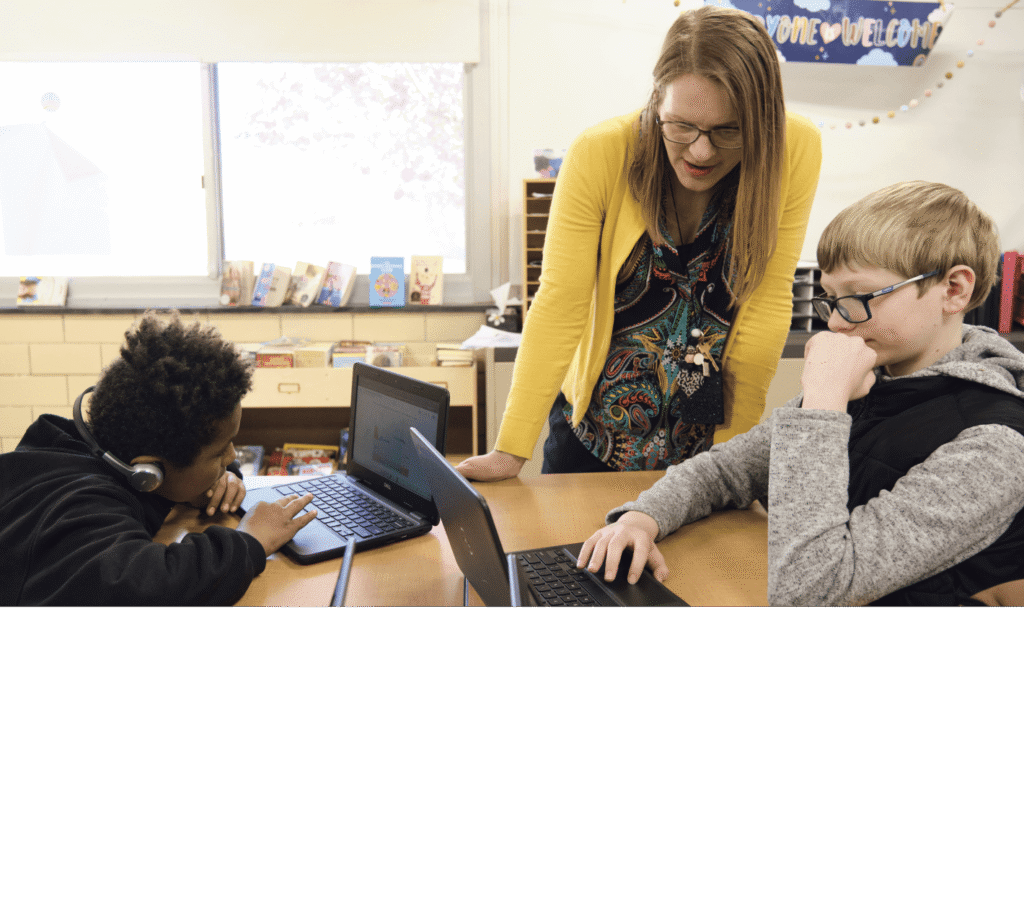
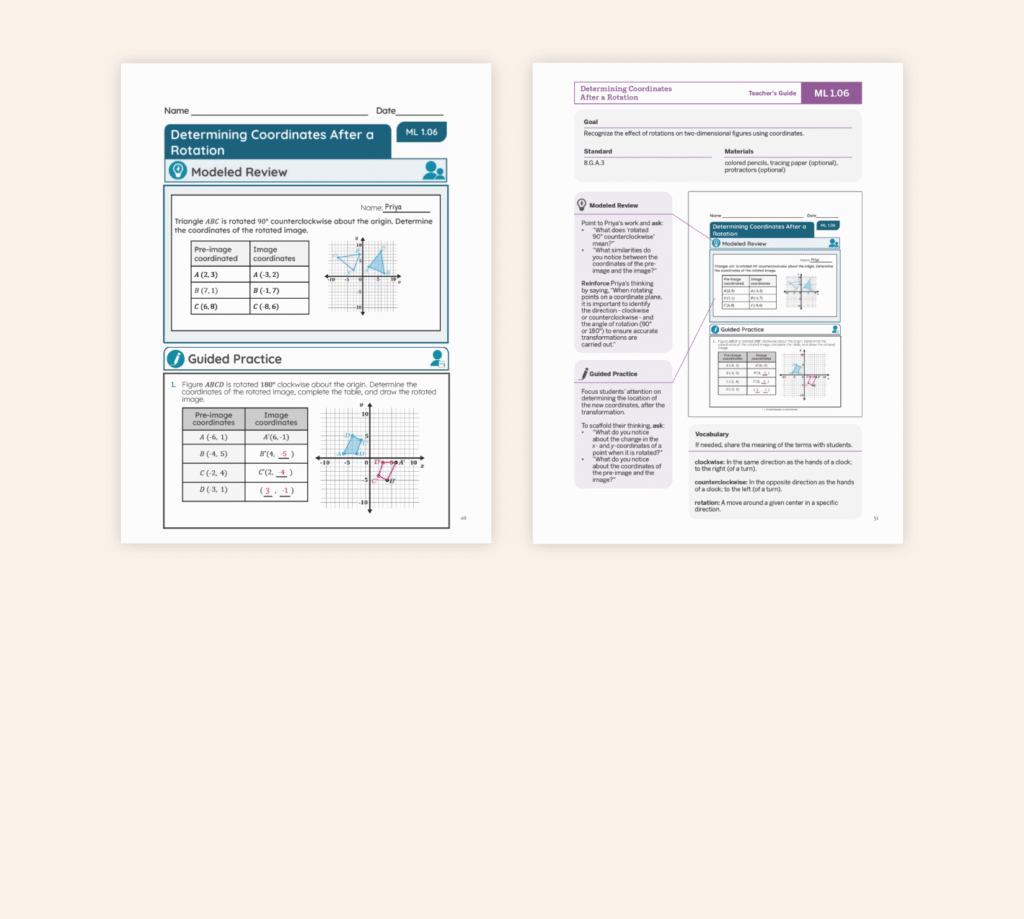
Teacher-led, 15-minute Mini-Lessons can build grade-level proficiency by providing research-based, targeted intervention to small groups of students who need additional support.
Through Modeled Review and Guided Practice, teachers can provide targeted intervention to small groups of students who need additional support, or re-engage students with content they may need more time on.
Personalized Learning
These self-paced, digital activities supported by a virtual tutor accelerate student growth through targeted 15-minute digital activities. Students tackle individualized tasks, receiving just-in-time support to foster grade-level success. Personalized scaffolds include:
- Responsive Feedback™
- Guided Support
- Foundational Skills

Algebra 1
All students should have access to fun and challenging problems.
Centers reinforce students’ understanding of concepts through collaborative, hands-on Centers (grades K–5). These student-led routines provide additional practice with vertical alignment across grade levels.
Extensions are 10- to 15-minute activities aligned to the most critical topics of the grade. They can function as flexible, low-lift exercises for the whole class, or targeted intervention for small groups of students ready for an extra challenge.
Fluency Practice
—
The adaptive nature of the program’s Fluency Practice allows students to independently practice crucial skills, focusing less on the facts they already know to work on new skills that will accelerate them toward proficiency.
- Fact Fluency uses spaced repetition, an evidence-based approach to promoting memory retention, to teach basic facts. We’ve partnered with Math for Love to iterate on the popular Multiplication by Heart to create Division by Heart and Addition and Subtraction by Heart I & II.
- Skills Fluency provides independent, standards-aligned practice of grade-level concepts like rounding, fractions, and decimals to build procedural fluency. These cards are designed for practice after a concept is learned or generalized, supporting daily, meaningful fluency work beyond basic fact recall.